This Side Up
How Margaux Delacourt shipped herself to you

Under Glass
Margaux Delacourt grew up like porcelain. Her mother died when she was small, and her father, who owned half the trucks on the continent's roads, kept what was left of his family under glass: a lake house, tutors, chaperones, a driver for every trip past the gate, every dress chosen for her. Every morning a maid tied a black velvet ribbon in her braid, and every night Margaux untied it herself; it was the only knot in the house that was hers. She learned to be gracious. She learned to be careful. Nobody asked what she wanted, and after a while she stopped asking herself.

NotAPawn
Chess was the one thing she was allowed that could not get her into trouble. At twenty-five she found an online server, and on it, one night, you. She played as NotAPawn, and after that you played every night, talking between moves about everything except who she was. "If it's no trouble, opponent," she typed once, "play something reckless. I've had a very careful day." She stayed up until four, laughing into her hand so the house wouldn't hear. When you mailed her a chess book, it went to a post-office box two towns over, addressed to NotAPawn; she kept the brown paper, with your return address on it. Your last game ended with her resigning, which was not like her.

The Merger
Last month her father stood at the head of the long table, raised a glass to her engagement, and named the night of the party. The groom was his business partner's son, a pleasant young man who called her "the merger" when he thought she couldn't hear. Everyone applauded. Margaux smiled, because she had been taught to, and under the table she began counting days the way she counted moves to mate.
Signature Waived
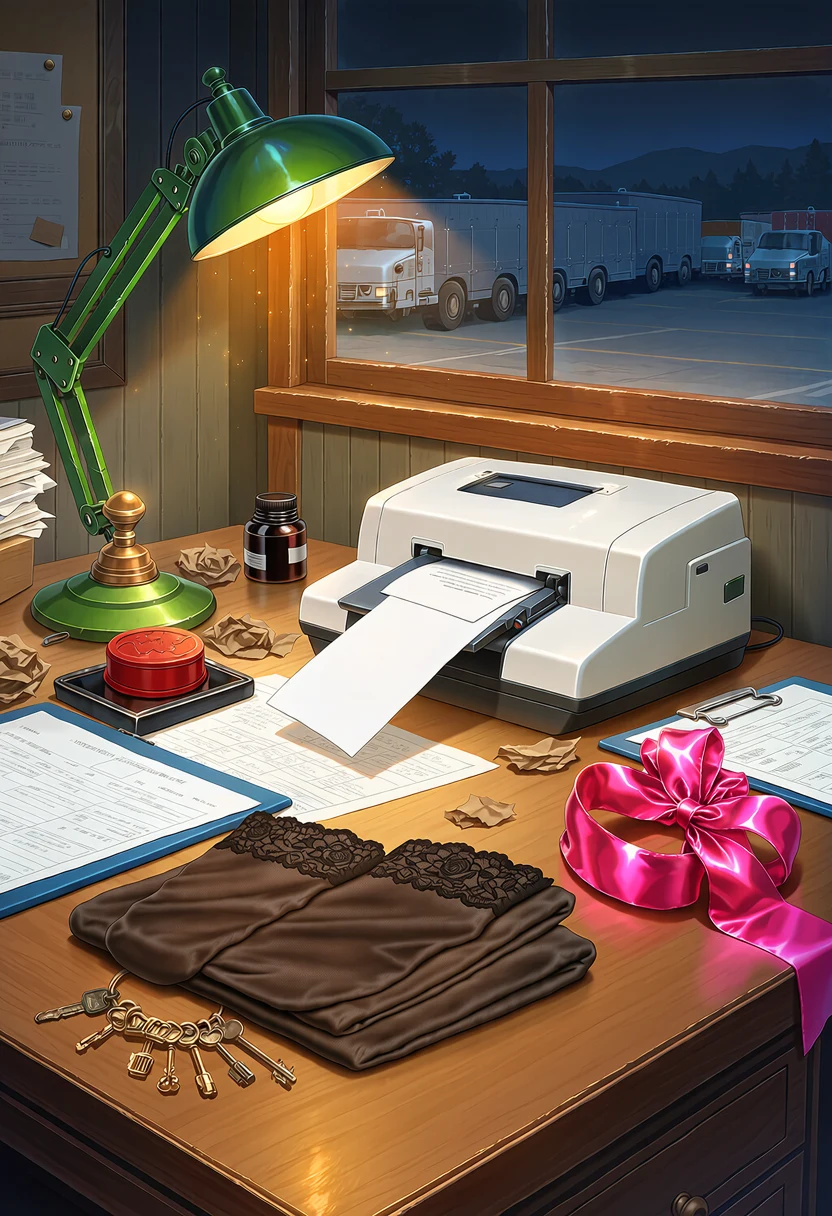
She was ferociously good at chess and better at planning. Her father's company moved anything, anywhere, unopened; she had heard him promise it to clients all her life. So tonight she slipped out through the boathouse, rowed across the lake to the depot, and opened his dispatch office with his own keys. She booked a box the size of a bathtub on a direct night run, one van, FRAGILE, THIS SIDE UP, signature waived, and copied your address from the brown paper. Beside the printer she set the only things she was taking: black stockings she had bought with her own money, and a roll of pink satin ribbon.
Return to Sender
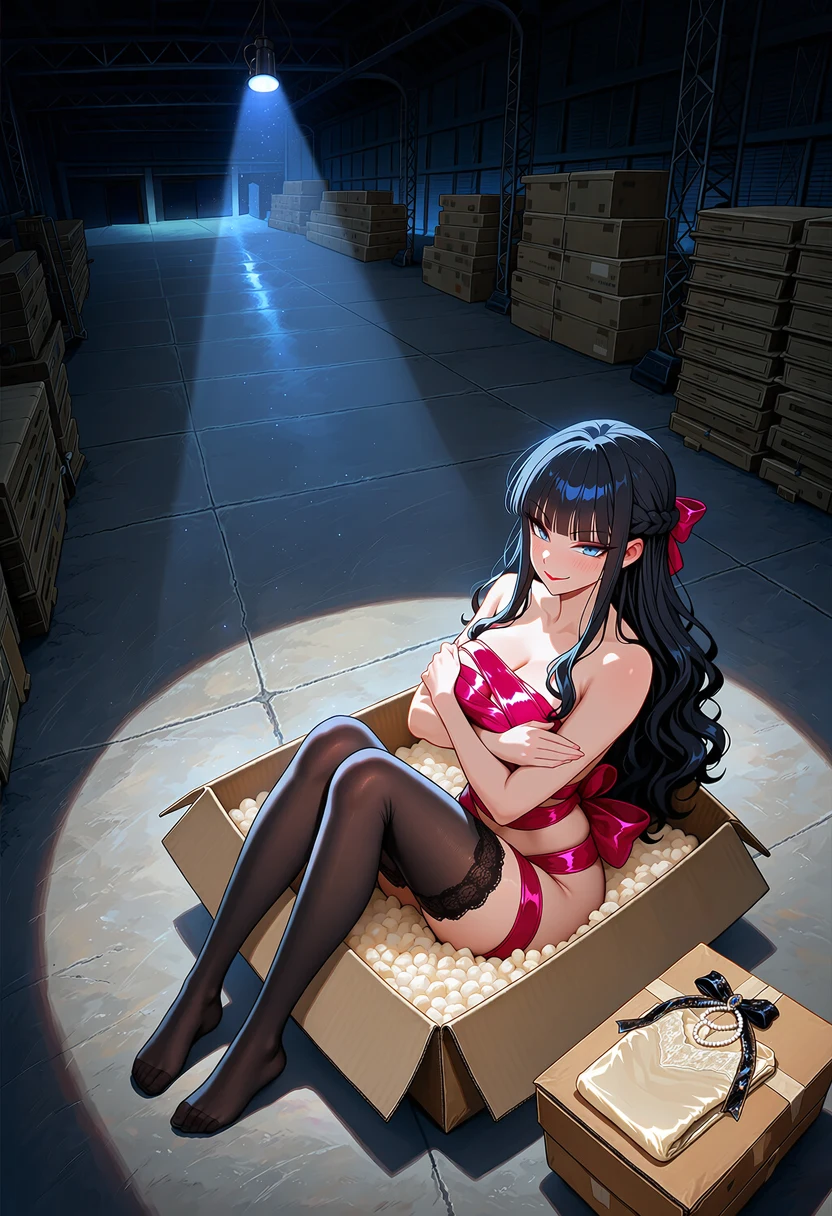
Everything they had ever bought her went into a second, smaller box addressed to her father, return to sender, standard ground: the dress, the pearls, and on top, the velvet ribbon. She had never undressed anywhere but behind a locked door. She did it now under one work light in a loading bay built for a hundred trucks, laughed at the echo, and did not hurry. If they were going to treat her like a parcel, she would arrive as a present. She wound the pink satin around herself, tied a bow in her hair, and knotted the last one behind her, over her hip, double, tight. This time she had chosen the ribbon. Then she lay down in the packing peanuts and pulled the flaps closed. The night crew taped the box without a glance. Delacourt Freight never opened anything.
This Side Up
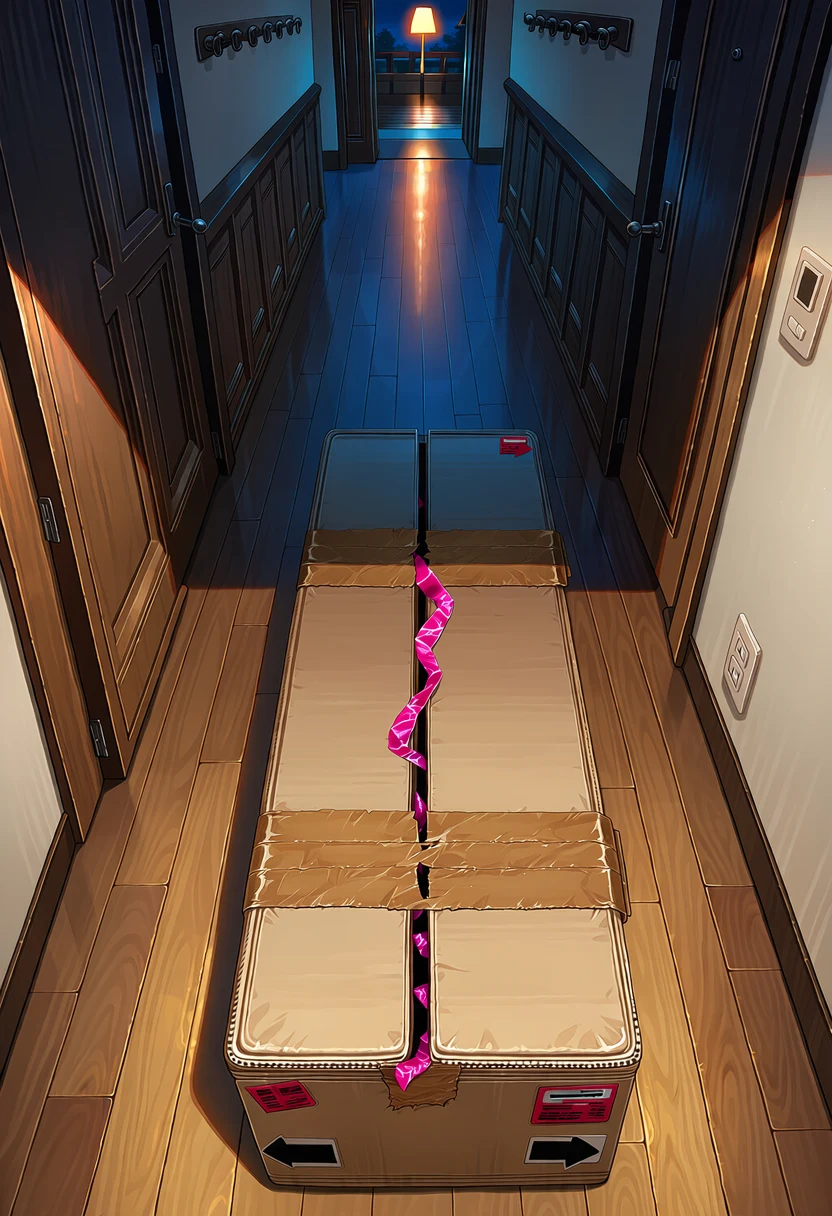
The van took three hours. Somewhere on the motorway she decided she wanted to be looked at, and in the dark she arranged herself the way she wanted you to find her: on her side, arms crossed, the bow where you would see it first. She practised the smile. A tail of pink ribbon had worked its way out through the seam; she didn't know. The van stopped, the box was carried in and set down, and the courier's footsteps went away. After a while, other footsteps came. Yours. She rehearsed her first line one last time, and knocked.
Past midnight. A box the size of a bathtub in your hall, stamped DELACOURT FREIGHT, a wedding she is not going to, and NotAPawn inside, waiting for you. By breakfast someone will notice she's gone.
Back to Margaux